Sola-Busca-Tarock (Q13087)
Handkolorierung
-
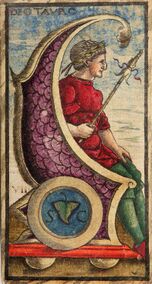 Trumpf VII – Deo Tauro
 -
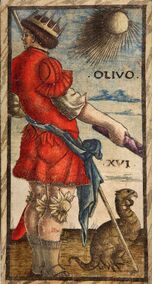 Trumpf XVI – Olivo
 -
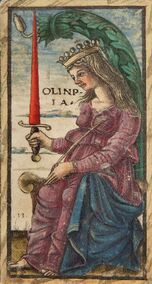 Schwerter Königin (Olinpia)
 -
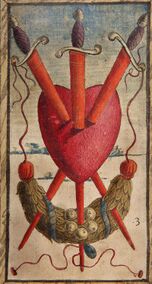 Schwerter Drei
 -
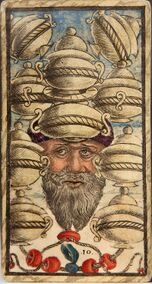 Kelche Zehn
 -
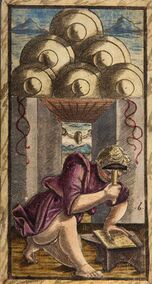 Münzen Sechs
 -
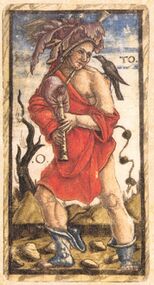 Trumpf 0 – Mato (Nachdruck)
 -
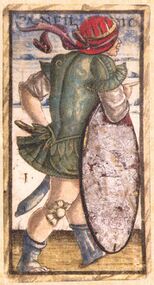 Trumpf I – Panfilio (Nachdruck)
 -
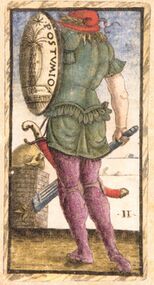 Trumpf II – Postumio (Nachdruck)
 -
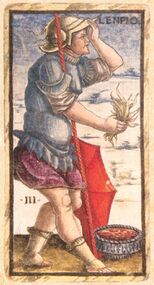 Trumpf III – Lenpio (Nachdruck)
 -
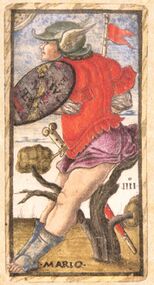 Trumpf IIII – Mario (Nachdruck)
 -
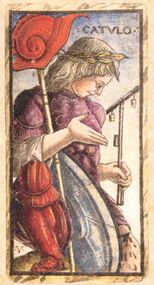 Trumpf V – Catulo (Nachdruck)
 -
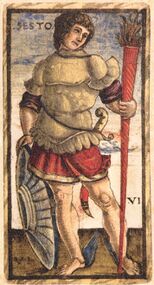 Trumpf VI – Sesto (Nachdruck)
 -
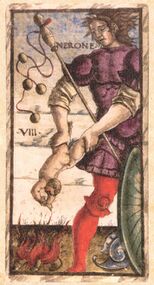 Trumpf VIII – Nerone (Nachdruck)
 -
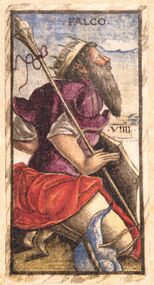 Trumpf VIIII – Falco (Nachdruck)
 -
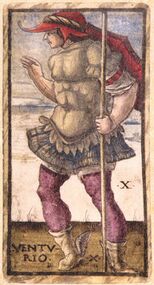 Trumpf X – Venturio (Nachdruck)
 -
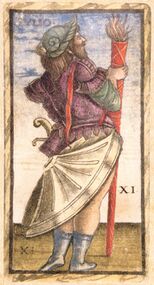 Trumpf XI – Tulio (Nachdruck)
 -
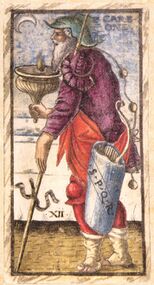 Trumpf XII – Carbone (Nachdruck)
 -
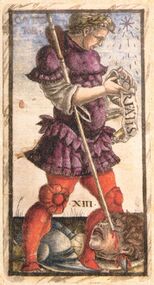 Trumpf XIII – Catone (Nachdruck)
 -
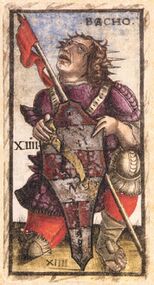 Trumpf XIIII – Bocho (Nachdruck)
 -
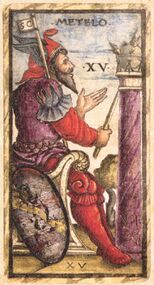 Trumpf XV – Metelo (Nachdruck)
 -
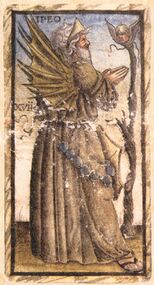 Trumpf XVII – Ipeo (Nachdruck)
 -
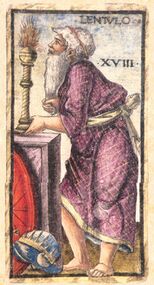 Trumpf XVIII – Lentulo (Nachdruck)
 -
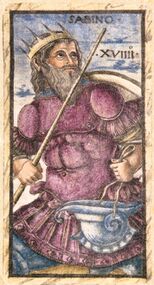 Trumpf XVIIII – Sabino (Nachdruck)
 -
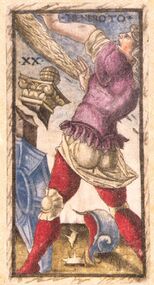 Trumpf XX – Nenbroto (Nachdruck)
 -
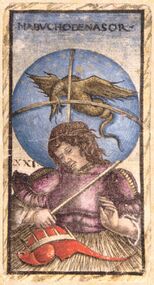 Trumpf XXI – Nabuchodenasor (Nachdruck)
 -
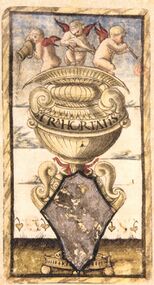 Kelche As (Nachdruck)
 -
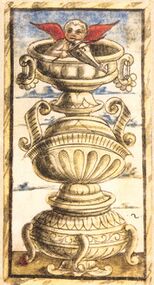 Kelche Zwei (Nachdruck)
 -
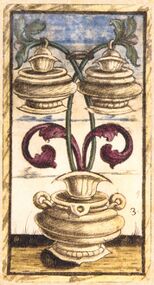 Kelche Drei (Nachdruck)
 -
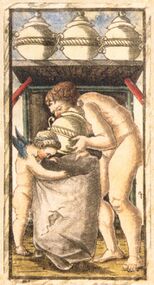 Kelche Vier (Nachdruck)
 -
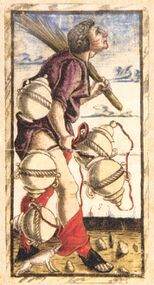 Kelche Fünf (Nachdruck)
 -
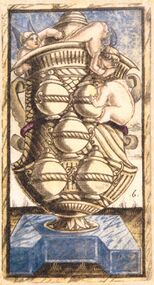 Kelche Sechs (Nachdruck)
 -
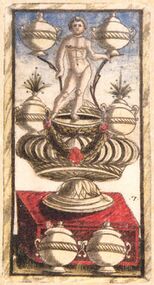 Kelche Sieben (Nachdruck)
 -
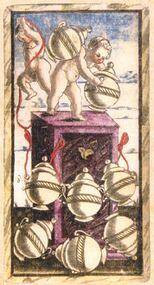 Kelche Acht (Nachdruck)
 -
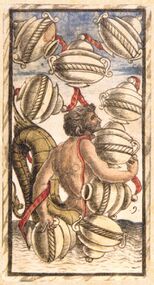 Kelche Neun (Nachdruck)
 -
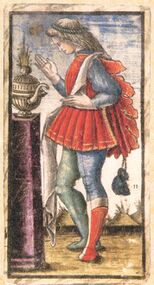 Kelche Bube (Nachdruck)
 -
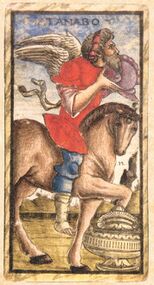 Kelche Ritter (Nachdruck)
 -
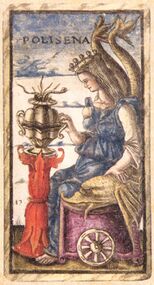 Kelche Königin (Nachdruck)
 -
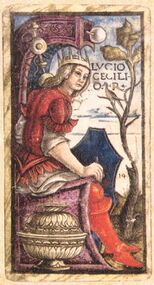 Kelche König (Nachdruck)
 -
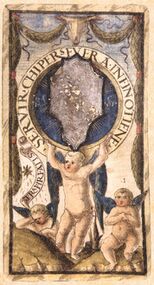 Münzen As (Nachdruck)
 -
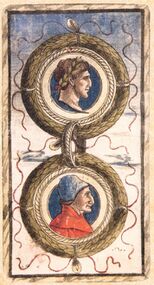 Münzen Zwei (Nachdruck)
 -
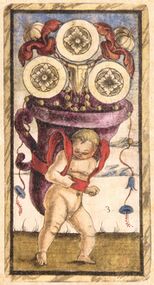 Münzen Drei (Nachdruck)
 -
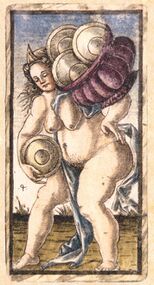 Münzen Vier (Nachdruck)
 -
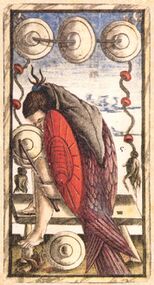 Münzen Fünf (Nachdruck)
 -
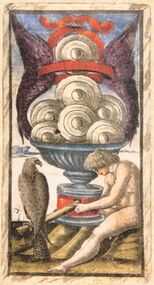 Münzen Sieben (Nachdruck)
 -
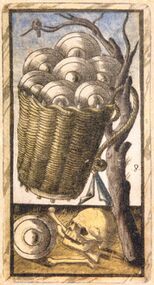 Münzen Acht (Nachdruck)
 -
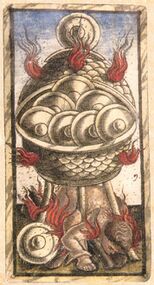 Münzen Neun (Nachdruck)
 -
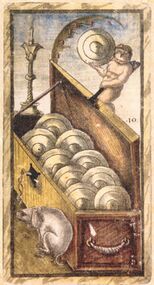 Münzen Zehn (Nachdruck)
 -
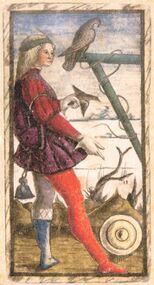 Münzen Bube (Nachdruck)
 -
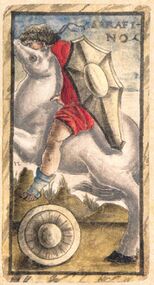 Münzen Ritter (Nachdruck)
 -
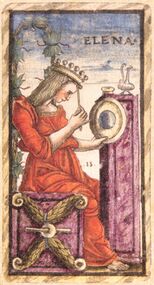 Münzen Königin (Nachdruck)
 -
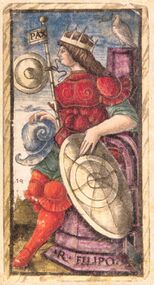 Münzen König (Nachdruck)
 -
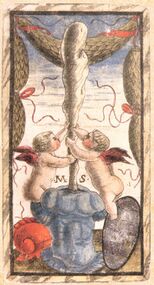 Stäbe As (Nachdruck)
 -
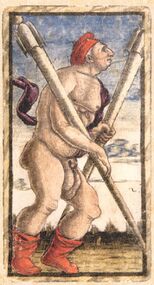 Stäbe Zwei (Nachdruck)
 -
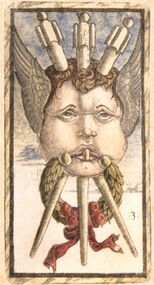 Stäbe Drei (Nachdruck)
 -
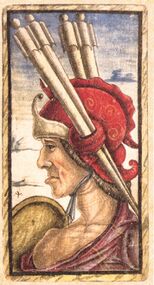 Stäbe Vier (Nachdruck)
 -
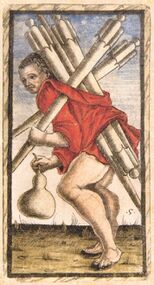 Stäbe Fünf (Nachdruck)
 -
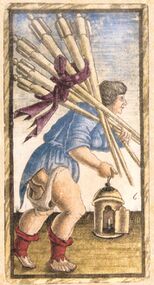 Stäbe Sechs (Nachdruck)
 -
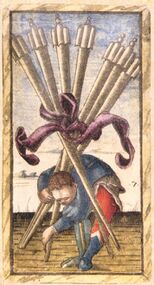 Stäbe Sieben (Nachdruck)
 -
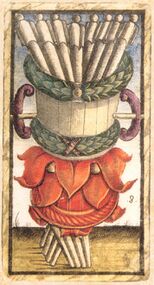 Stäbe Acht (Nachdruck)
 -
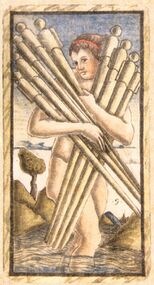 Stäbe Neun (Nachdruck)
 -
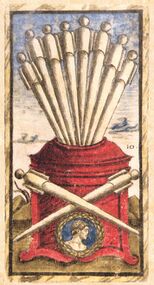 Stäbe Zehn (Nachdruck)
 -
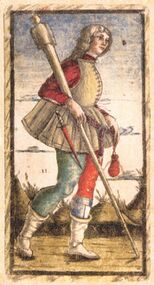 Stäbe Bube (Nachdruck)
 -
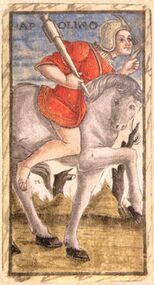 Stäbe Ritter (Nachdruck)
 -
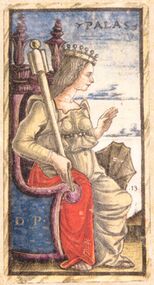 Stäbe Königin (Nachdruck)
 -
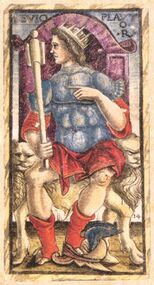 Stäbe König (Nachdruck)
 -
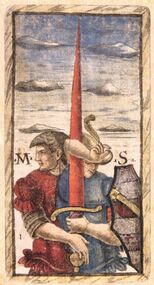 Schwerter As (Nachdruck)
 -
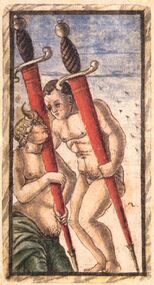 Schwerter Zwei (Nachdruck)
 -
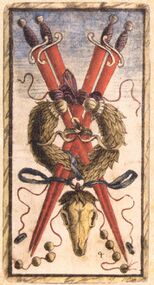 Schwerter Vier (Nachdruck)
 -
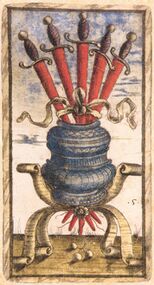 Schwerter Fünf (Nachdruck)
 -
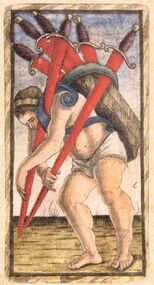 Schwerter Sechs (Nachdruck)
 -
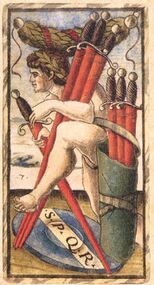 Schwerter Sieben (Nachdruck)
 -
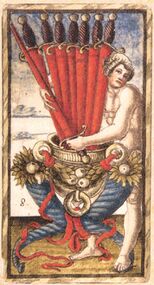 Schwerter Acht (Nachdruck)
 -
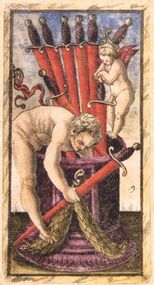 Schwerter Neun (Nachdruck)
 -
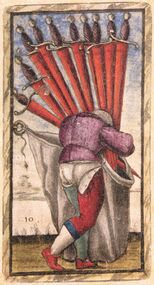 Schwerter Zehn (Nachdruck)
 -
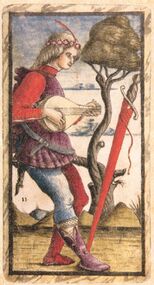 Schwerter Bube (Nachdruck)
 -
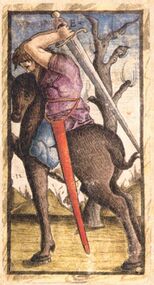 Schwerter Ritter (Nachdruck)
 -
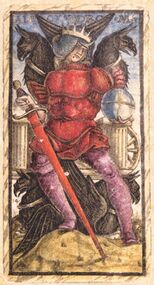 Schwerter König (Nachdruck)


Beschreibung der Public Domain Review
The Latin motto TRAHOR FATIS (I am drawn by Fate) appears but four times in the Tarot masterpiece of the Italian Renaissance, the Sola Busca deck, and yet it hangs unmistakably over the cards' entire colorful procession of ancient Greek and Roman heroes. Armored in the style of late-fifteenth century northern Italy, they bear bagpipes, shields, lyres, pennants, staffs, and torches, while accompanied by basilisks, crows, falcons, doves, and eagles. Every single card is a miniature drama — the expressions of the highly individualized figures inviting us to speculate, like the Tarot itself, on the past and future of this cryptic world.
When the Italian Ministry of Cultural Heritage in Milan purchased the Sola Busca tarot deck in 2009, it had existed for five hundred years, and yet had barely ever been seen — a very strange thing for a deck of playing cards. Before a spate of studies appeared in Italian after 1990, it had only been written about three times: by Count Leopold Cicognara in Memoirs to Serve the History of Intaglio Printing (1831); by William Hughes Willshire in A Description of Playing and Other Cards (1876); and in 1935, when British Museum art historian Arthur Mayger Hind's Early Italian Engravings advanced the first hypothesis about the origin of the deck and its author. Although still hotly debated, the contemporary scholarly consensus is that the Sola Busca deck — now housed at the Pinacoteca de Brera — was engraved in 1491, most likely in Ferrara, and was colored by hand about a decade later, in Venice. (Other versions of this deck exist in fragmented, unpainted form, preserved by the Albertina in Vienna, the British Museum, and elsewhere.)
Considered the oldest complete seventy-eight card tarot deck in existence, the Sola Busca — named for the family of Milanese nobles who owned it for some five generations — was the first to be produced using copperplate engraving. It is also the earliest known tarot deck that illustrates the Major and Minor Trumps in the way that has become the standard, with characters and objects depicting allegorical scenes. In the Renaissance era this would have been revolutionary, while, today, some of these cards may seem familiar. In 1909, when Arthur Edward Waite commissioned artist Pamela Colman–Smith to illustrate his The Pictorial Key to the Tarot (1910), she drew inspiration — and for nearly a dozen cards, the exact imagery — from the Sola Busca deck, black-and-white photographs of which were exhibited at the British Museum in 1908.
The genius of the Tarot is its multivocality, its ability to convey manifold meanings independent of the interrogator. Shorn from the historical, mythological, and pictorial associations that would have been available to its users in fifteenth-century Venice or Ferrara, the Sola Busca deck is limited in its use for divinatory purposes today, and yet, since its enigmatic imagery irresistibly invites decoding, the deck nonetheless beckons twenty-first century cartomancers into a game of high imagination. Online Tarot forums host the most ingeniously freewheeling speculation about the Sola Busca's sources and meanings, while the scholarly interpretations continue to be tentative and provisional, offering space for amateurs to make their own discoveries. In talismanic publisher Scarlet Imprint's The Game of Saturn: Decoding the Sola-Busca Tarocchi (2017), Peter Mark Adams proposes a baroque hypothesis that the Sola Busca deck was a dark grimoire to aid the black magical operations of a secret Venetian elite cabal.
Some believe that Nicola di Maestro Antonio d'Ancona, “one of the most eccentric painters of the Renaissance”, may have been the artist behind the Sola Busca deck, although “the arguments are not entirely convincing”. Beyond the mystery of their creator lie the many puzzles embedded in these cards. Why does Alexander the Great (King of Swords) figure so largely in this deck? Is the “M.S.” on the Aces referring to Marin Sanudo, consigliere to the aristocratic Ferrrara D'Este family? Is Catone (XIII) a reference to Cato the Younger, who conquered Cyprus in 58 BCE, and thus an allusion to Venice's annexation of Cyprus in 1489, two years before the deck's creation? Whenever the TRAHOR FATIS inscription appears, it is accompanied by a seven–pointed “bearded” star (pogonius), raining influence toward Earth and its denizens. Is this the malefic Caput Algol in the head of the Medusa? Or the Great Comet of 1472? The fatis of the Tarot, and particularly of this magnificent work of Renaissance art, truly remains “in the stars”, pulling us fatefully toward its endless riddles.
Text: Kevin Dann, The Public Domain Review (2022) — Lizenz CC BY-SA 4.0 (ausgenommen die darin zitierten Wendungen; gekürzt um den Hinweis auf die Bildergalerie der Originalseite). Dieser Abschnitt steht nicht unter CC0.
Notizen
- Objektangaben der Pinacoteca di Brera (Ausstellungsheft, S. 5): Kupferstiche mit dem Grabstichel, gedruckt auf gepresstes, zu Karton verklebtes Papier, mit Farben und Gold illuminiert, Rückseite als Porphyr bemalt; je 144 × 78 mm; Venedig 1491. Stecher laut Brera Nicola di maestro Antonio, Kolorist ein unbekannter Buchmaler, 1491 in Venedig belegt.
- Die Brera erschließt die Kolorierung 1491 in Venedig aus Inschriften auf den Schilden der Trümpfe IIII (Mario) und XIIII (Bocho) und nennt Marin Sanudo den Jüngeren als wahrscheinlichen Auftraggeber. Die Public Domain Review (Abschnitt oben) nennt dagegen Ferrara als Druckort und eine rund zehn Jahre spätere Kolorierung; Hinds „Early Italian Engravings“ erschien laut Brera 1938, nicht 1935.
- Provenienz laut Brera: benannt nach den früheren Besitzern, der Marchesa Busca und dem Conte Sola; 1924 unter Denkmalschutz gestellt, 2009 vom italienischen Kulturministerium per Vorkaufsrecht gekauft und der Brera zugewiesen. Unkolorierte Einzelblätter derselben Stiche besitzen die Albertina in Wien und das British Museum.
- Fotos: sechs Karten von der Website der Pinacoteca di Brera (©Pinacoteca di Brera, Milano – MiC), unverändert; mehr Aufnahmen des Originals sind online nicht zu finden. Die übrigen 72 Karten zeigen vorläufig einen Nachdruck (Bildunterschrift „Nachdruck“), bis bessere Aufnahmen des Originals vorliegen: Es sind die Bilder von Wikimedia Commons, die auch die Public Domain Review zeigt; laut ihrer Quelle waitesmith.org stammen sie von einem nummerierten Nachdruck („deck #88“). Farben und Randbordüre weichen vom Original ab.
- Ein Hersteller ist nicht eingetragen, weil es für den Stecher Nicola di maestro Antonio im Wiki noch keinen Akteur gibt.
Steuerstempel
Zur Zeit dieses Spiels (1491) gehörte Venedig zum Hoheitsgebiet Republik Venedig. Für dieses Gebiet ist in dieser Zeit kein System der Spielkartensteuer erfasst — es gibt hier also keine Stempel zu suchen.